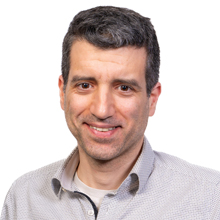
Short bio
Julio Saez-Rodriguez is Head of Research at EMBL’s European Bioinformatics Institute (EMBL-EBI) and holds a professorship in Medical Bioinformatics and Data Analysis at the Faculty of Medicine of Heidelberg University. He also serves as visiting director of the Institute for Computational Biomedicine, group leader in the EMBL-Heidelberg University Molecular Medicine Partnership Unit, a member of the Heidelberg ELLIS Unit, and co-director of the DREAM challenges. Julio has an outstanding track record in research supervision, having mentored more than 20 MSc students, 19 PhD candidates, several of whom are still ongoing, and over 25 postdoctoral researchers. His interdisciplinary background and strong focus on systems biology make him a key contributor to training initiatives that bridge computational innovation and medical research. Julio will be supported in supervision by Aurélien Dugourd, senior staff scientist in the Saez-Rodriguez group at EMBL-EBI. Aurélien leads the development and application of computational methods to extract interpretable, mechanistic insights from multi-omic datasets. His work focuses on leveraging prior biological knowledge to study signaling and metabolic pathways involved in complex diseases, particularly cancer and the development of treatment resistance. He collaborates closely with pharmaceutical partners to translate these methodologies into industrially relevant applications that support the discovery of novel therapeutics and improve understanding of drug resistance mechanisms.
Research interest
Julio’s research is dedicated to understanding the complexity of cellular signaling through computational modeling. His group develops integrative methods that combine omics data, such as phospho-proteomics, with prior knowledge of regulatory networks to uncover context-specific mechanisms of disease. By creating predictive tools and frameworks to model intracellular signaling, Julio contributes to personalized and systems medicine. His leadership in community-based efforts like the DREAM challenges has shaped open, collaborative approaches in computational biology. While the methods developed by his group are of interest to scientists across disciplines, their primary focus lies in cancer, autoimmune diseases, and conditions affecting the kidney and heart